What is an AI Influencer?
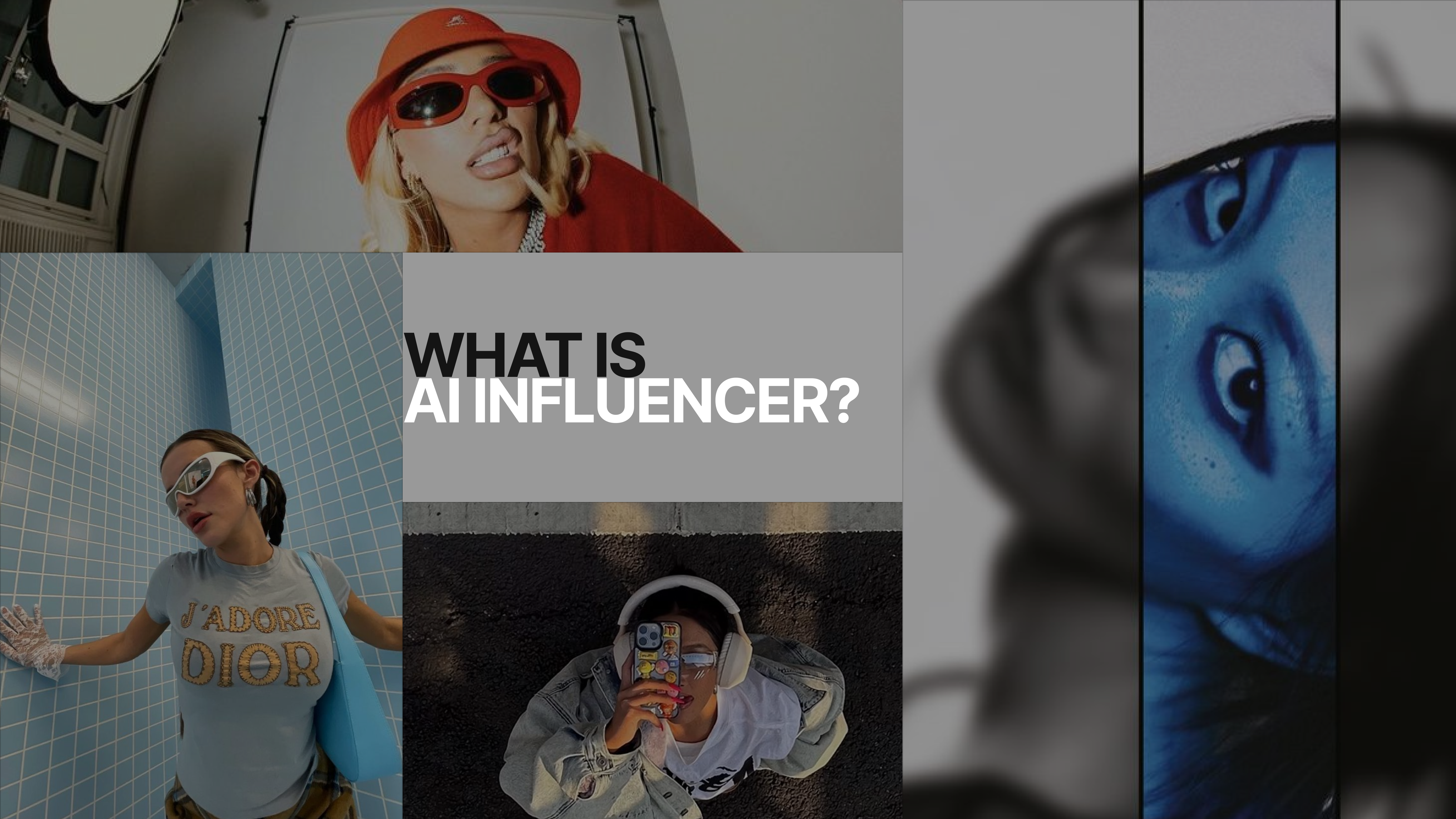
Scroll through Instagram for five minutes and you'll probably come across her. She might be posing on a beach in Malibu, sharing her morning routine, or posting a sponsored story for a luxury skincare brand. The photos are stunning. The captions are witty and personal. The comments are full of real people tagging their friends and saying "obsessed with her."
She doesn't exist.
She never woke up this morning. She has never been to Malibu. She doesn't use the skincare product she's promoting. She is a fully AI-generated virtual persona - and she is earning more money per month than most real influencers with twice the following.
This is the world of AI influencers. And it's bigger, more profitable, and more accessible to regular people than almost anyone realizes.
What is an AI Influencer?
An AI influencer is a virtual persona - a fictional character with a consistent visual appearance, personality, backstory, and content style - that is created and managed using artificial intelligence tools. They exist entirely on social media platforms, interact with real audiences, attract real brand partnerships, and generate real income.
Unlike a cartoon character or an illustrated mascot, modern AI influencers look photorealistic. Thanks to advances in AI image generation, they have faces, bodies, and expressions that are indistinguishable from real photographs to the casual eye. They have names, ages, locations, interests, aesthetic preferences, relationship statuses, and opinions. They post regularly, respond to comments, share "personal" moments, and build genuine emotional connections with audiences who - in many cases - know perfectly well the character is artificial and follow them anyway.
The person or team behind the AI influencer is invisible. They're the creator, the art director, the writer, the strategist, and the business owner - all at once. They use AI image generation tools to produce the visual content, AI writing tools to craft captions and responses, and scheduling platforms to automate posting. The character is the product. The audience is the asset. The brand deals and monetization streams are the income.
This Isn't Science Fiction - It's Already Happening at Scale
The concept of virtual influencers has existed since the late 2010s, but it was slow and expensive then - requiring 3D artists, animation studios, and significant technical investment. What changed everything was the democratization of AI image generation tools. Starting in 2022 and accelerating rapidly through 2024 and 2025, tools like Midjourney, Leonardo AI, and Stable Diffusion made it possible for a single person with no artistic background to generate photorealistic, consistent images of a fictional human character at almost zero cost.
The result is an explosion of AI influencer accounts across Instagram, TikTok, YouTube, and X - ranging from accounts with a few thousand followers to established virtual personas with millions.
The brands noticed immediately. Major companies including Prada, Balmain, Samsung, Calvin Klein, L'Oréal, and BMW have all worked with AI influencers on sponsored campaigns. Not as an experiment or a novelty - as a strategic marketing choice, often driven by the fact that AI influencers deliver consistent content, never have a PR scandal, never cancel a shoot, and can be adapted to any visual brief without negotiation.
The Real People Behind the Biggest AI Influencers
Understanding who built the most successful AI influencers helps make this feel concrete rather than abstract. These aren't tech companies or Hollywood studios. They're individuals and small teams who identified the opportunity early and executed consistently.
Lil Miquela is the most famous AI influencer in the world. Created in 2016 by a Los Angeles-based startup called Brud, she presents as a 19-year-old Brazilian-American model and musician living in Los Angeles. She has over 2.5 million Instagram followers, has collaborated with Prada, Calvin Klein, Samsung, and BMW, appeared in music videos, and been covered by Time magazine and Vogue. Estimates of her annual earnings range from $10 million to $15 million across brand deals, music, and merchandise. She was one of Time's "25 Most Influential People on the Internet." She is entirely fictional.
Aitana Lopez is a more recent and arguably more instructive example because she was created by a small Spanish agency - The Clueless - specifically as a business model, not as an art project. Aitana is a 25-year-old AI-generated Spanish model with pink hair and a fitness and gaming aesthetic. She was created in 2023 when the agency's founder, Diana Núñez, grew frustrated with the unreliability of human models. Within months of launching, Aitana was earning between $3,000 and $10,000 per month from brand partnerships and subscription content on Patreon. Major brands including sports and fashion companies began reaching out for collaborations without knowing initially that she wasn't real.
Imma is a Japanese virtual influencer created by a Tokyo-based agency called Aww Inc. She has collaborated with IKEA Japan, Porsche, Valentino, and SK-II. Her Instagram aesthetic is strikingly consistent - she's always depicted in high-fashion contexts with a signature bob haircut - and she has become one of the most recognizable virtual faces in the Asia-Pacific market.
Noonoouri is a stylized (clearly non-realistic) virtual influencer created by a Munich-based designer, with collaborations including Versace, Dior, and Kim Kardashian's SKIMS. She recently became the first virtual influencer to sign a record deal with a major music label.
What's notable about this list isn't the names - it's the backgrounds. The people who created these characters were not AI researchers or software engineers. They were a startup founder, an agency owner, a designer, and a production company. The barrier wasn't technical sophistication. It was the decision to try.
How Does an AI Influencer Actually Make Money?
This is the part that surprises most people, because the income streams are more diverse - and more substantial - than the typical influencer model.
Brand partnerships and sponsored content are the most direct income stream. Brands pay to have the AI influencer feature their product in posts, stories, or videos. Rates vary by following size and engagement, but AI influencers with 100,000–500,000 followers typically charge $500–$5,000 per sponsored post. Those with 1 million+ followers command $10,000–$50,000 per campaign. Crucially, brands are increasingly willing to pay a premium for AI influencers because there's no scheduling complexity, no risk of personal controversy, and total creative control.
Subscription content through platforms like Patreon or Fanvue is a significant and growing income stream. Audiences pay a monthly fee for exclusive content - behind-the-scenes images, personal updates, interactive content, or higher-quality visuals. An AI influencer with 5,000 paying subscribers at $5/month generates $25,000/month in recurring revenue. Aitana Lopez reportedly earns a substantial portion of her income through this model.
Digital products including preset packs, wallpapers, NFTs, merchandise, and ebooks associated with the character's persona and niche are another revenue layer. These are especially effective when the character has a specific interest area - fitness, fashion, gaming, travel - where a dedicated audience will buy products aligned with that identity.
Selling the service to brands is a less discussed but highly lucrative model. Rather than building an independent influencer account, some creators offer to build and manage custom AI influencer personas for brands that want a virtual spokesperson. A brand that wants a consistent, photorealistic virtual brand ambassador will pay $3,000–$15,000 for initial creation and $1,000–$3,000/month for ongoing content production. This is a pure B2B service model with no need to grow your own audience.
Affiliate marketing embedded naturally into the character's content - recommending products, tools, or services in exchange for a commission on resulting sales - works the same way it does for human influencers, but with the advantage that you control the content entirely and can optimize it for conversion without any of the authenticity tension human influencers sometimes face.
A mature AI influencer business combining several of these streams - moderate brand deals, a subscription tier, digital products, and one or two service clients - can realistically generate $8,000–$20,000/month. The most successful independent creators are well above that.
What Does It Actually Take to Build One?
This is where most articles get vague. Let's be specific.
Building an AI influencer requires four things: a character concept, a visual identity, a content system, and a growth strategy. None of them require technical expertise. All of them require consistency and creative thinking.
The character concept is your foundation. Who is this person? What do they look like, how old are they, where do they live, what do they care about, what's their aesthetic, what's their voice? The more specific and internally consistent you make the character, the more real they feel to an audience - and the easier it becomes to generate content that stays on-brand.
The visual identity is produced using AI image generation tools - primarily Midjourney, Leonardo AI, or Stable Diffusion with consistent character seeds or reference images. Maintaining visual consistency (same face, same proportions, same general style) across hundreds of images is the main technical challenge for beginners, and it's the skill that takes the most practice to develop.
The content system covers how you produce and schedule posts at volume. A working AI influencer account typically posts once a day minimum. The content pipeline involves generating images, writing captions in the character's voice (using ChatGPT or Claude with a character brief), editing and formatting, and scheduling. Most creators build a production workflow that produces a week's worth of content in a few hours - but getting there takes practice and systematization.
The growth strategy is the same as for any social media account: consistency, niche focus, hashtag and SEO strategy, collaboration with other accounts, and engagement. The content has to actually be interesting and visually compelling in the context of the platform. An AI influencer that looks generic and posts generic captions will grow slowly regardless of the tool quality. One with a specific, compelling character in a clear niche grows much faster.
Why 2026 Is Still Early for This Opportunity
It might seem like AI influencers are everywhere. They're not - not yet. The accounts that have broken through to mainstream attention are visible precisely because they're still relatively rare. Most markets, most niches, and most content styles are wide open.
More importantly, the tools have only recently become good enough that a single person with no design background can produce consistent, high-quality results. The window between "this is technically possible" and "everyone is doing it" is still open. The people who build now, grow audiences now, and establish their characters now are building assets that will be significantly harder to replicate in two years when the market is more crowded.
The brands are also still figuring this out. Early movers in any content category have disproportionate access to brand deals, press coverage, and platform promotion - simply because there aren't many options for brands who want to work with AI creators. Being one of the few established AI influencers in a specific niche puts you in a very different negotiating position than you'd be in a saturated market.
Ready to Build Your Own?
If you read this and your first reaction was "I want to do this" - that instinct is worth listening to.
The Jobescape AI Influencer course is built for people who want to go from zero to a functioning, monetized AI influencer account with a step-by-step system rather than months of trial and error.
You'll learn how to design a character concept that stands out in a specific niche, generate a consistent visual identity using AI image tools, build a content production system that lets you post daily without it consuming your life, grow an audience from scratch on Instagram or TikTok, and set up your first monetization stream - whether that's brand outreach, a subscription tier, or selling the service to businesses.
No design background. No social media following. No technical skills required. Just a clear process and the willingness to build something new.
→ Join the AI Influencer course and start building your virtual persona today.
Frequently Asked Questions
Q: Are AI influencers legal? Do you have to disclose that the persona is AI-generated?
A: Laws and platform policies around AI-generated content are evolving quickly. Several major markets including the EU and parts of the US are moving toward requiring disclosure of AI-generated personas in commercial contexts, particularly for sponsored content. Most established AI influencers already disclose their virtual nature often prominently and many find that transparency actually increases audience engagement rather than hurting it. Building with disclosure in mind from the start is the safest and most sustainable approach.
Q: Don't audiences feel deceived when they find out an influencer is AI?
A: Surprisingly rarely. Studies of AI influencer audiences consistently show that a large portion of followers know or suspect the creator is artificial and follow anyway. The emotional connection to a well-developed character is real regardless of whether that character is human. Lil Miquela disclosed her virtual nature years ago and her following continued to grow. The content and the character matter more than the origin story.
Q: How long does it take to build a following from scratch?
A: With consistent daily posting in a clear niche, most AI influencer accounts reach their first 10,000 followers within two to four months. Reaching 100,000 followers typically takes six to twelve months of consistent, quality content. The timeline compresses significantly if the account produces content that is visually distinctive and taps into trending interests or aesthetics.
Q: Can one person manage an AI influencer account alone?
A: Yes and most successful smaller AI influencer accounts are run by a single person. The AI tools handle the heavy lifting on content production. The main time investment is in character development, image generation (which gets faster as you build your workflow), caption writing, and engagement. Most solo creators spend three to five hours per week maintaining an active account once their production system is set up.
Q: What niche should I build an AI influencer in?
A: The best niche is one with strong visual appeal, an active audience on Instagram or TikTok, and clear brand interest. Fashion, fitness, gaming, travel, beauty, and lifestyle are the established categories. More specific sub-niches - sustainable fashion, calisthenics, anime-inspired aesthetics, solo female travel - often grow faster because the audience is more defined and the competition is lower. Choose something you can sustain creative interest in, because consistency is the most important growth factor.